
Dentures and Full-Mouth Rehabilitation in Sushant Lok, Gurugram
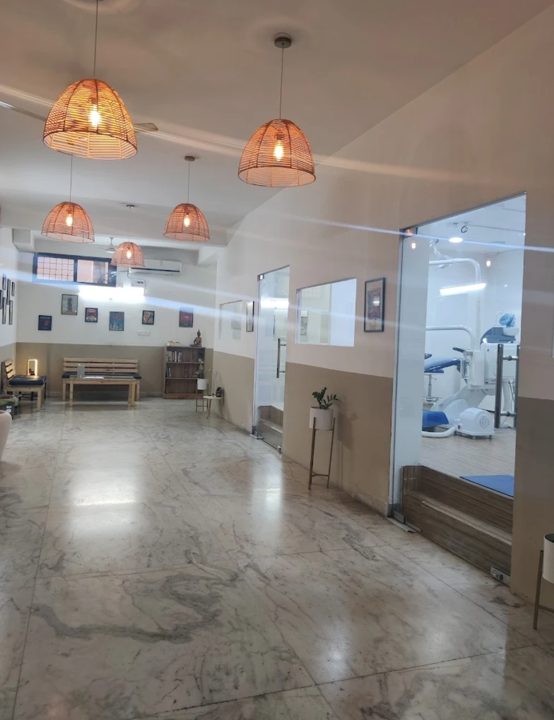
When several teeth are missing or worn down, eating, speaking and smiling all become harder. Dentures replace missing teeth with a removable set, and full-mouth rehabilitation rebuilds the whole bite with a planned combination of crowns, bridges, implants or dentures. At Modenta Dental Clinic in Sushant Lok Phase 1, Sector 43, Gurugram, this work is led by Dr Gayathri Sreenivasan, an MDS prosthodontist whose specialty includes dentures, geriatric dentistry and full-mouth rehabilitation.
Book on WhatsAppCall +91 78376 74763
What the treatment involves
A complete denture replaces all the teeth in one jaw; a partial denture fills gaps between your remaining teeth and clips to them. Flexible and cast-metal partial dentures are options for comfort and strength. Full-mouth rehabilitation goes further: it looks at every tooth, the gums, the jaw joints and the way the teeth meet, and puts together a step-by-step plan to restore chewing, appearance and comfort.
Who it suits, and the alternatives
Dentures suit people who have lost several or all teeth and want a reliable, removable replacement. Full-mouth rehabilitation suits people with many worn, broken or missing teeth, or a bite that has collapsed over time. For people who find a lower denture loose, implants can be added to hold it firmly. Fixed implant bridges are another option where the bone allows. You are shown which options fit your mouth, your health and your goals.
What happens, visit by visit
- Assessment. A full examination with X-rays, a look at your bite and jaw joints, and a conversation about what bothers you most.
- The plan. The treatments are sequenced, so the most urgent problems are dealt with first.
- Impressions and trials. For dentures, impressions and a trial set let you check the fit, bite and appearance before the final set is made.
- Fitting and adjustments. The final dentures or restorations are fitted, with follow-up visits to ease any sore spots.
Recovery and aftercare
New dentures take a few weeks to get used to: speech settles quickly, and chewing improves as you practise with soft foods first. Take dentures out at night, clean them daily and keep them moist. Sore spots are normal early on and are eased at follow-up visits. Regular check-ups matter, because the shape of the gums changes over time and dentures may need relining.
Who treats you

BDS, MDS (Prosthodontics & Implantology) · Prosthodontist & Implantologist
Trained in advanced implantology at Kyushu Dental College, Japan; plans implants, crowns, bridges, dentures and full-mouth work.
Questions before you book?
Modenta Dental Clinic · 2772, C Block, Sushant Lok Phase 1, Sector 43, Gurugram
Frequently asked questions
How long does it take to get used to new dentures?
Usually a few weeks. Speech adapts first; chewing improves as you practise, starting with soft food cut into small pieces.
Can implants stop a lower denture from moving?
Often, yes. Two or more implants can hold a lower denture firmly in place. Whether they suit you depends on your bone and general health.
Is full-mouth rehabilitation done all at once?
Rarely. It is planned in stages, starting with pain or infection, so the work fits around your life and each step is checked before the next.
Do you treat elderly patients?
Yes. Dr Gayathri's specialty includes geriatric dentistry, with time set aside for older patients and their families to understand each step.
